
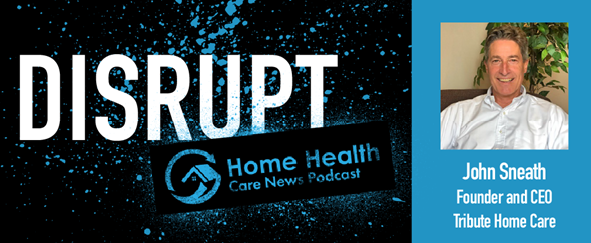
 John Sneath, founder and CEO of HCAOA member Tribute Home Care, was recently featured on the Home Health Care News Disrupt podcast. Sneath shared insights about why Tribute is doubling down on private-pay personal care and how the agency approaches caregiver recruitment and hiring.
0 Comments
The Massachusetts Supreme Judicial Court (SJC) recently handed down a key ruling that the three-prong test for independent contractors applies to the relationships between a franchisor and its franchisee, where the franchisor must also comply with the Federal Trade Commission’s (FTC) Franchise Rule.
The SJC held that the independent contractor statue applies to the franchisor-franchisee relationship and is not in conflict with the franchisor’s disclosure obligations set forth in the FTC Franchise Rule. The SCJ determined a franchisee providing services to a franchisor under the terms of a franchise agreement may, in fact, be classified as an “employee” of the franchisor under state wage-and-hour law. Read more here.  Last month in Jinks v. Credico (USA) LLC, the Massachusetts Supreme Judicial Court concluded that the appropriate method for determining whether two companies were “joint employers” for purposes of the Massachusetts wage and hour laws is to evaluate the “totality of the circumstances of the parties’ working relationship.” This is the same test courts apply when analyzing this issue under the federal Fair Labor Standards Act (FLSA).
 As part of National Home Care and Hospice, the Home Care Alliance of Massachusetts, collected first-hand stories from home care agencies – including several HCAOA members! – about the front-line challenges they faced, and how they overcame them. The stories were collected into a single podcast and read by middle school drama students. An interesting listen for your next commute!
|
Archives
July 2024
Categories
All
Upcoming Events |

 RSS Feed
|
Phone: 202-519-2960 | 444 N. Capitol Street NW, Suite 428 | Washington, DC 20001
[email protected] | sitemap © 2024 Home Care Association of America. All Rights Reserved. | Privacy Policy | Refund Policy |
|