
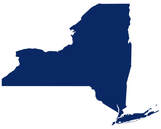
 In an effort to prevent the occupational exposure to an airborne infectious disease, the New York legislature has passed the aptly named New York Health and Essential Rights Act, or NY HERO Act, which amends the New York Labor Law (NYLL) by adding two new sections. This bill has been delivered to Governor Cuomo’s desk and he is expected to sign it into law. Unlike other states, New York does not have robust and longstanding state occupational safety and health laws, standards and mechanisms. This bill is therefore notable because it represents one of the rare times that New York State has passed laws setting minimum safety standards that apply to the private sector. read more
0 Comments
 On March 12, Governor Andrew Cuomo signed legislation providing all public and private employees in New York up to four hours of paid leave per vaccine injection to obtain a COVID-19 vaccine. The new law, which adds a new Section 159-c to the New York Civil Service Law and a new Section 196-c to the New York Labor Law, provides that the paid COVID-19 vaccination leave may not be charged against any other leave that the employee is entitled to, such as any paid sick leave or any leave provided under a collective bargaining agreement (CBA). The law, which expires by its terms on December 21, 2022, requires that employers provide a “sufficient period of time,” up to four hours, to be paid at the employee’s regular rate of pay, for each COVID-19 vaccine injection. read more
 Effective December 31, 2020, the minimum wage increased for all private sector employees in the state except for those who work in New York City. The minimum wage increased from $13.00 to $14.00 per hour for employees working in Long Island and Westchester, and from $11.80 per hour to $12.50 per hour for the rest of the state except New York City, where the minimum is already $15.00 per hour. This could lead to an increase in labor costs for employers in New York.
|
Archives
May 2024
Categories
All
Upcoming Events |
 RSS Feed
|
Phone: 202-519-2960 | 444 N. Capitol Street NW, Suite 428 | Washington, DC 20001
info@hcaoa.org | sitemap © 2024 Home Care Association of America. All Rights Reserved. | Privacy Policy | Refund Policy |
|